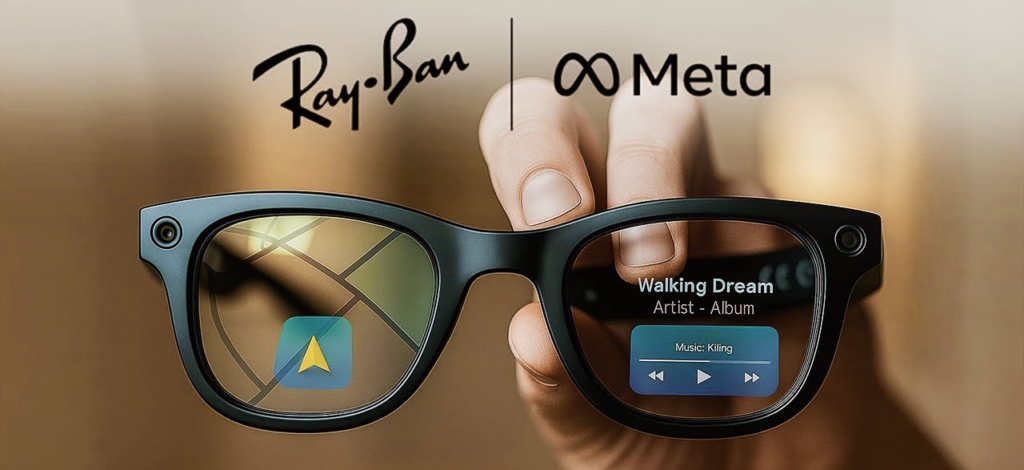
Remember when smart glasses sounded like something straight out of a science-fiction movie? Today, they are becoming a lot more practical. You can wear a pair that looks like regular glasses, listen to music, take photos, record videos, talk to an AI assistant, and even get help with everyday tasks.
Meta is taking that idea a step further with its latest announcements at Meta Connect 2026. The company has introduced new AI-powered glasses along with several features aimed at making wearable technology feel more useful in real life.
The new lineup includes the Ray-Ban Meta Gen 3, Ray-Ban Meta Audio, and new capabilities for Meta’s display-equipped glasses. The focus is not just on taking pictures anymore. Meta is bringing together AI, cameras, microphones, better audio, hearing enhancement and hands-free controls in a way that could change how people interact with technology.
And honestly, that is what makes these glasses interesting. They are designed to fit into your day rather than asking you to stop what you are doing every few minutes to pull out your phone.
Meta Is Expanding Its AI Glasses Lineup
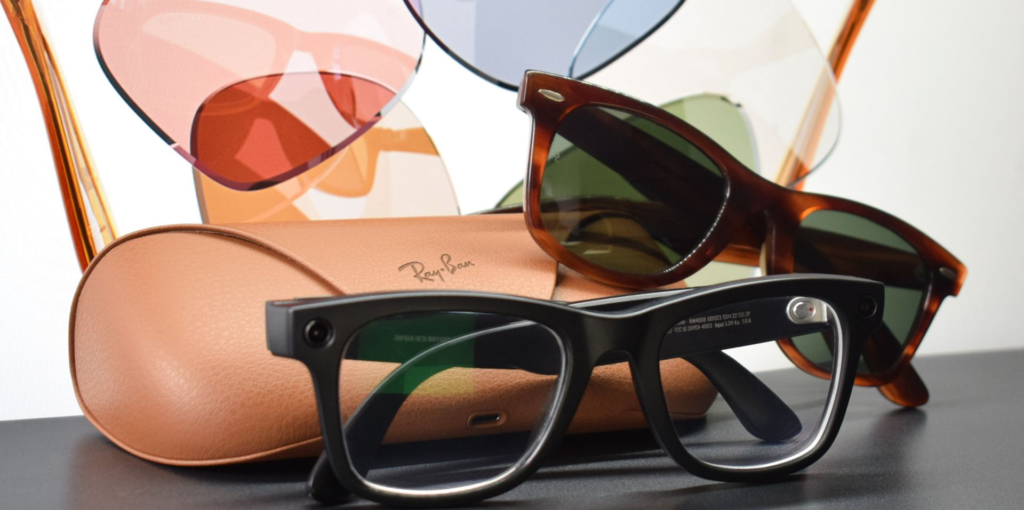
Meta’s latest announcement is bigger than the launch of a single pair of smart glasses.
The company is expanding its wearable lineup with different options for people who want different experiences. The Ray-Ban Meta Gen 3 is aimed at users who want cameras, AI and improved audio, while the Ray-Ban Meta Audio takes a simpler approach by leaving out the camera and concentrating on sound.
There are also new capabilities for Meta’s display-equipped glasses. These features are designed to make it easier to access information while keeping your hands free.
Meta says it plans to offer more than 100 glasses options across Ray-Ban, Oakley and Meta Glasses by the end of 2026. The wider range is expected to include different frame styles, lighter designs and models focused on longer battery life.
That variety could be important because not everyone wants their smart glasses to do exactly the same thing. Some people may care about photography, others about music, and some may simply want an AI assistant they can talk to without constantly looking at a screen.
Muse AI Brings a More Personal Touch
One of the most talked-about additions is Muse AI, Meta’s personal AI agent.
Most people are already familiar with AI assistants that answer questions. You ask something, they respond, and that’s usually where the interaction ends.
Muse AI is designed to go a little further.
Instead of simply giving you information, it can help with certain tasks. According to the details surrounding the launch, Muse can interact with websites and connected services for things such as sending emails, booking travel, filling out forms and making purchases.
The idea sounds especially useful when you are already busy.
Imagine you’re walking through a store and want to check the price of something. Instead of taking your phone out, opening a browser and searching for it, you could simply ask your glasses.
Or imagine you’re travelling and need help arranging something while carrying luggage. Being able to use your voice could make the whole process feel much easier.
On supported Meta glasses, users can activate Muse by saying its name and giving it a command. The assistant can also work on certain tasks in the background and return when the task is completed.
There is one important limitation, though: Muse AI on Meta glasses is currently limited to users in the United States.
Ray-Ban Meta Gen 3 Gets a Hardware Upgrade
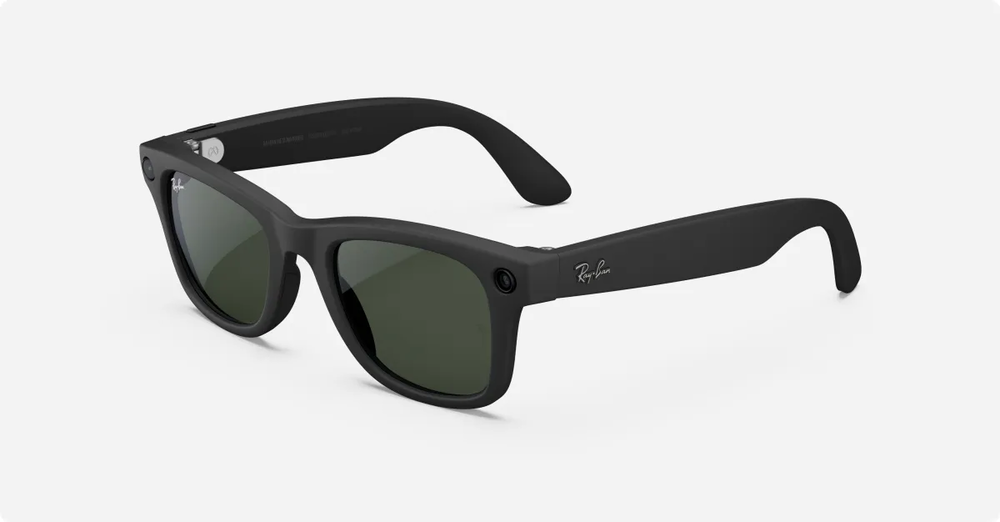
The Ray-Ban Meta Gen 3 is one of the biggest hardware announcements from Meta Connect 2026.
At first glance, they still look like fashionable everyday glasses. But underneath that familiar design is a collection of technology designed to make the glasses more capable.
One of the most noticeable improvements is battery life. The glasses are designed to offer up to nine hours of battery life.
For smart glasses, battery life matters a lot. Nobody wants to start their morning with a fully charged pair only to find themselves reaching for the charging case halfway through the day.
The camera has also received an upgrade. The Ray-Ban Meta Gen 3 comes with a 12MP camera capable of recording 3K Ultra HD video.
There is also a six-microphone array, with Meta saying it can reduce background noise by more than 90 percent.
That could make a real difference when you’re recording something in a busy place. Whether you’re walking through a crowded market, attending an event or simply spending time outdoors, clearer sound can make recorded memories much more enjoyable to revisit.
The Ray-Ban Meta Gen 3 starts at $449 in the US. Meta has confirmed that the glasses will also launch in India, although Indian pricing had not been announced in the available report.
Dolby Atmos Capture Could Make Videos Feel More Alive
Good video is not only about what you see. Sound matters just as much.
Think about watching an old travel video. The picture might be beautiful, but if the sound is dull or unclear, the experience can feel strangely flat.
Meta is addressing this with Dolby Atmos Capture, which is designed to allow users to record video with spatial sound.
The idea behind spatial audio is simple: sound can feel like it is coming from different directions rather than simply playing as a flat recording.
That could be particularly interesting for people who record concerts, trips, family gatherings or spontaneous moments.
A short clip of a busy street, for example, could capture not only what the camera sees but also the atmosphere around the wearer.
The new glasses also introduce features such as Dynamic Photo, Landscape Crop Mode and Private Processing, giving users more control over how they capture and process content.
Dynamic Photo Helps With Those Tricky Moments

We’ve all taken a photo and discovered afterward that someone blinked, moved, or looked away at exactly the wrong moment.
That’s where Dynamic Photo could come in handy.
The feature is designed to capture multiple frames and allow Meta AI to suggest a suitable frame.
It could be especially useful when photographing children, pets, sports or anything else that refuses to stay still.
Instead of worrying about getting that perfect split-second shot, the glasses can capture multiple possibilities.
It’s a small feature, but these are often the kinds of additions that make technology feel genuinely useful. You may not think about Dynamic Photo when buying the glasses, but you could appreciate it the next time your dog suddenly runs across the frame or your child makes a funny face for half a second.
Landscape Crop Mode Gives Creators More Flexibility
Another useful addition is Landscape Crop Mode.
The feature allows users to capture photos, videos, hyperlapses and slow-motion footage in a horizontal format.
For anyone who creates content, this can be helpful because different platforms and situations call for different video formats.
Sometimes vertical video works perfectly. Other times, landscape footage simply looks better.
Being able to capture content hands-free while walking, travelling or attending an event gives creators another option without requiring them to carry a phone or camera in their hand.
Private Processing Addresses an Important Concern
AI glasses are exciting, but they also bring up an obvious question: What happens to all the information these glasses can see and hear?
After all, these aren’t ordinary glasses. They have cameras, microphones and AI capabilities built into them.
Meta is addressing part of that conversation with Private Processing.
The feature is designed to provide certain AI capabilities without Meta accessing the user’s data.
Privacy is likely to become even more important as smart glasses become more capable. The more these devices can understand about their surroundings and the person wearing them, the more people will want clear answers about how their information is handled.
For smart glasses to become a normal part of everyday life, trust will matter just as much as technology.
Ray-Ban Meta Audio Takes a Different Approach
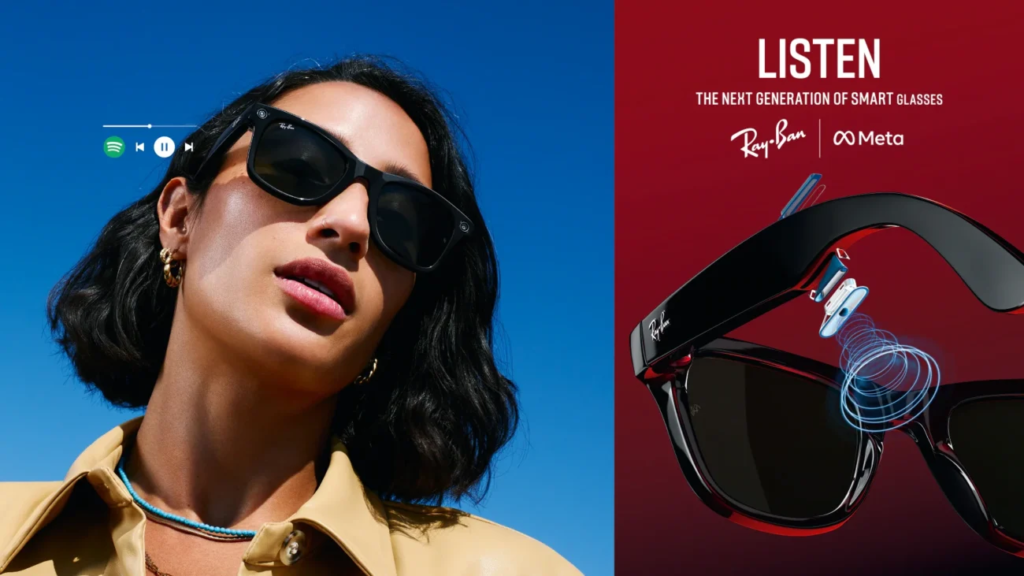
Not everyone wants a camera sitting on their face.
Meta appears to recognize that, which is why it has also introduced Ray-Ban Meta Audio.
These glasses are designed without a camera. Instead, they focus on audio and hands-free experiences.
The glasses weigh 43 grams and can provide up to 12 hours of use on a single charge. The charging case can provide up to another 48 hours of use.
That makes the concept quite different from camera-equipped smart glasses.
For someone who mainly wants to listen to music, interact with AI or stay connected while keeping their hands free, a camera-free design could feel more comfortable.
The Ray-Ban Meta Audio starts at $349 in the US and is scheduled to ship on October 13. An India launch had not been announced in the available report.
Hearing Enhancement Adds an Accessibility Angle
Meta is also exploring how smart glasses can become useful for more than entertainment and content creation.
The company has announced Hearing Enhancement for select AI glasses in the United States later this year.
The feature is designed for adults with perceived mild to moderate hearing loss and can be configured at home.
This is an interesting direction for wearable technology. Smart glasses are often discussed in terms of cameras, AI assistants and music, but features like hearing enhancement show how the technology could also support everyday communication and accessibility.
For now, the feature is limited to the US, so people in other markets will need to wait for information about wider availability.
What Does This Mean for India?
India is already an important market in Meta’s smart-glasses story.
Earlier reports said the first-generation Ray-Ban Meta smart glasses were scheduled to become more widely available in India through Amazon, Flip-kart and Reliance Digital from November 21, 2025.
The earlier generation offered several frame and lens options, including prescription, sun, polarized and Transitions choices.
Those glasses also came with Meta AI, a camera, open-ear speakers, microphones and a charging case.
Meta also introduced India-focused features such as Hindi support for Meta AI, a celebrity AI voice featuring Deepika Padukone and a Restyle feature for transforming photos.
The company had also announced plans for UPI Lite support, allowing eligible users to scan and pay for smaller transactions through voice commands.
The previous-generation glasses started at ₹29,900 in India. However, that price should not be treated as the expected price for the new Gen 3 model because Indian pricing for Gen 3 had not been announced in the available report.
So, What Really Makes These Glasses Different?
The biggest change is not necessarily one individual feature.
It is the way Meta is bringing everything together.
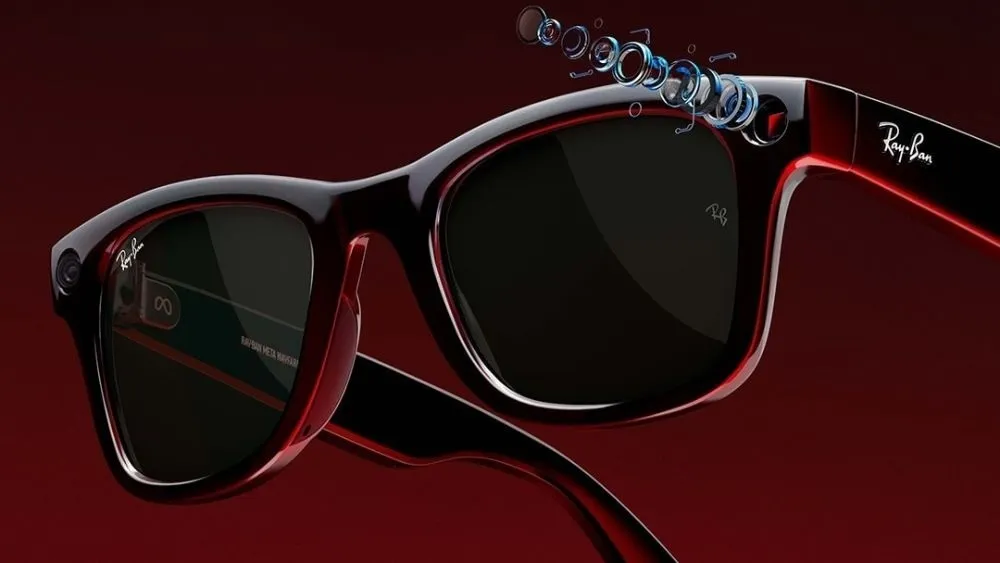
The camera lets the glasses capture what you’re looking at. The microphones allow you to communicate with AI and pick up sound. The speakers let you listen without completely covering your ears. And AI can understand requests and, in some cases, help carry out tasks.
That’s a very different idea from simply putting a camera on a pair of sunglasses.
With Muse AI, the glasses are becoming more like a wearable assistant. Instead of asking your phone for help every time you need something, you can potentially speak naturally and continue whatever you were doing.
Picture yourself cooking and needing a quick answer. You’re carrying groceries and want directions. You’re travelling and want to record a moment. You’re walking and suddenly remember something you need to look up.
In all of those situations, hands-free technology can make sense.
Meta Is Clearly Betting Big on AI Wearables
Meta’s latest announcements also show that the company is thinking beyond one product.
Earlier in 2026, Meta introduced a broader Meta Glasses lineup with different frame designs and Muse Spark-powered AI capabilities. These included hands-free AI interaction, an action button, open-ear speakers and expanded language support.
Meta has also previously described India as an important market for its wearable and AI-device strategy.
The latest Meta Connect announcements build on that direction, bringing more capable hardware and AI features into the same ecosystem.
It suggests that Meta doesn’t see smart glasses as a small side project. The company appears to be building toward a future where wearable devices can become another everyday way of interacting with digital services.
What Could Everyday Use Actually Look Like?
This is probably the most interesting part.
Technology specifications are useful, but people ultimately want to know one thing: How will this make my day easier?
For a regular user, the answer could be convenience.
You could take a photo without reaching for your phone. You could listen to music while still hearing what’s happening around you. You could ask an AI assistant a question while your hands are busy. You could record a moment from your own point of view.
For creators, the improved camera, microphones, spatial audio and landscape recording could make spontaneous content easier to capture.
For people interested in accessibility, Hearing Enhancement points toward another possible use for wearable technology.
But there is another side to the story.
People will also want to know how these glasses behave around other people, how privacy is handled and how comfortable they are to wear for long periods.
In other words, making smart glasses useful is only half the challenge. Making people comfortable using them in everyday public spaces is just as important.
The Future of Smart Glasses Is Getting More Interesting

Smart glasses are still an evolving category. They haven’t replaced smartphones, and there is no reason to expect that to happen overnight.
But the technology is moving in an interesting direction.
The early appeal of smart glasses was largely about taking photos and listening to audio without holding a device. Now, AI is becoming a much bigger part of the experience.
Muse AI, improved cameras, better microphones, spatial audio, hearing enhancement and hands-free controls all point toward the same idea: technology that stays with you instead of demanding your constant attention.
That could be especially useful in moments when looking down at a phone simply isn’t convenient.
FAQs
1. What are Meta’s new AI glasses?
Think of them as regular-looking glasses with a smart side— they can help with AI, photos, audio, and everyday tasks without making you grab your phone.
2. What exactly does Muse AI do?
Muse AI is designed to make using the glasses feel more natural, so you can interact with AI while you’re walking, working, or simply going about your day.
3. What makes Ray-Ban Meta Gen 3 different?
The new version brings useful upgrades like better battery life, an improved camera, clearer audio, and smarter features that make hands-free use feel more practical.
4. Are the new Meta AI glasses coming to India?
Yes, an India launch has been confirmed for Ray-Ban Meta Gen 3, although the Indian price and some availability details are still to be announced.
5. Can these glasses actually be useful in everyday life?
That’s where they get interesting—you can take photos, listen to audio, use AI, and handle little moments hands-free instead of constantly reaching for your phone.
Smart Shopping Ideas for Better Deals and Everyday Savings
Look, let’s stop playing around with fancy headers, corporate blog structures, and robot transitions. Smart…
Useful Tech & Gadgets You’ll Want to Try in 2026
Let’s be completely real for a second. If you look at tech magazines, gadget review…

Simple Smart Living Ideas to Make Everyday Life Easier
Life does not always have to be complicated. Sometimes, a few small changes in the…

Helpful Digital Life Tips for Modern Everyday Living
Technology has quietly become part of our everyday routine. Digital Life We use our phones…

Fun Experiences and New Adventures Worth Trying in 2026
Sometimes, life starts feeling a little too predictable. We wake up, Experiences go to work…

Simple Style & Wellness Tips to Upgrade Your Everyday Lifestyle
Let’s stop rushing for just a single second. Seriously. Style & Wellness Put your phone…