

Calculations are a part of everyday life, even when we don’t realise it. From checking monthly expenses and calculating shopping discounts to working out travel costs, percentages and school assignments, numbers are involved in many small decisions. Sometimes, a simple calculation can be done mentally. But when the numbers become complicated or there are several steps involved, doing everything manually can take more time and increase the chances of mistakes. This is where an Online Calculator becomes useful. It provides a quick and convenient way to solve mathematical problems without needing a physical calculator. Users can simply open a calculator on their computer, tablet or smartphone, enter the numbers and get the result within seconds.
The best part is that online calculators are not only designed for students or people who regularly work with numbers. Anyone can use them, whether they are managing household expenses, planning a budget, studying mathematics or handling everyday professional tasks.
Let’s explore how online calculators work, their different types, useful features and the ways they can make everyday calculations easier.
What Is an Online Calculator?

An Online Calculator is a digital tool that helps users perform mathematical calculations through a website or application. It works similarly to a traditional handheld calculator but offers the convenience of being accessible through internet-connected devices.
Users can enter numbers, select mathematical operations and receive results almost instantly.
For example, if someone wants to calculate a 20% discount on a product worth ₹2,000, they can enter the required values into a calculator instead of working through the entire calculation manually.
Online calculators can handle different types of mathematical operations, including:
- Addition and subtraction
- Multiplication and division
- Percentages and discounts
- Fractions and decimals
- Square roots and powers
- Basic financial calculations
- Time and unit conversions
Some advanced calculators also provide specialised functions for scientific, financial, educational and professional requirements.
In simple terms, an online calculator makes mathematical calculations quicker, easier and more accessible.
How Does an Online Calculator Work?
Using an online calculator is generally straightforward. Most tools have a simple interface where users can enter numbers and choose the operation they want to perform.
The calculator processes the entered values according to the selected mathematical operation and displays the result.
Here is how the process usually works.
Step 1: Open the Calculator
First, open an online calculator using a smartphone, laptop, desktop or tablet.
Most basic calculators do not require users to create an account or complete a registration process.
Step 2: Enter the Numbers
Type the numbers you want to calculate using the available number buttons or input fields.
For example, if you want to add 250 and 150, enter both values into the calculator.
Step 3: Select the Mathematical Operation
Choose the operation you need to perform.
Common options include:
- Addition (+)
- Subtraction (−)
- Multiplication (×)
- Division (÷)
- Percentage (%)
Step 4: Get the Result
After entering the required information, select the calculate or equal button.
The calculator processes the numbers and displays the answer.
Step 5: Review Your Calculation
Before using the result for an important purpose, check whether the correct numbers and mathematical operations were entered.
This is particularly useful when calculating expenses, payments or other financial figures.
Different Types of Online Calculators
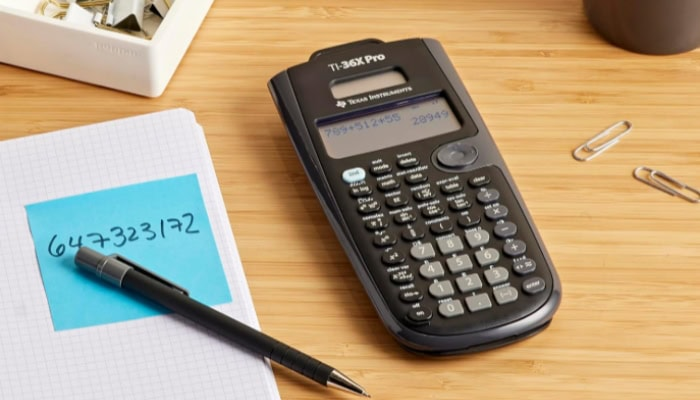
Not every calculator is designed for the same purpose. Some are suitable for basic mathematical operations, while others are developed to solve more specialised problems.
Understanding the different types can help users select the right calculator for their requirements.
1. Basic Online Calculator
Best for everyday mathematics
A basic calculator is designed for simple mathematical operations. It is useful for people who regularly need to add, subtract, multiply or divide numbers.
Common uses include:
- Adding shopping expenses.
- Calculating monthly bills.
- Checking simple totals.
- Splitting expenses between friends.
- Working out basic numerical problems.
It is generally the easiest type of calculator to understand because it focuses on essential mathematical functions.
2. Scientific Calculator
Best for students and advanced mathematics
A scientific calculator includes more mathematical functions than a basic calculator.
It is commonly used by students, teachers, engineers and people working with advanced mathematical problems.
Some common functions include:
- Trigonometric calculations
- Logarithms
- Exponents and powers
- Square roots
- Fractions
- Scientific notation
These calculators are particularly useful for subjects such as mathematics, physics, chemistry and engineering.
3. Percentage Calculator
Best for shopping and financial calculations
Percentage calculators help users find percentages without performing lengthy calculations.
For example, someone shopping for a product worth ₹5,000 with a 15% discount can use a percentage calculator to determine the discount amount.
They are useful for:
- Shopping discounts
- Price comparisons
- Exam scores
- Profit and loss calculations
- Business expenses
- Tax-related estimates
4. Financial Calculator
Best for money management
Financial calculators are designed to help users understand different financial figures.
Depending on their features, they can calculate:
- Loan EMIs
- Interest amounts
- Savings growth
- Investment returns
- Monthly payments
- Compound interest
These tools can make financial calculations easier to understand, although the final figures may depend on additional charges, rates and financial conditions.
5. Date and Time Calculator
Best for planning and scheduling
A date and time calculator helps users calculate the difference between two dates or work out time durations.
For example, someone planning a project can use it to find the number of days between the starting and ending dates.
Common uses include:
- Calculating age.
- Finding the difference between dates.
- Counting days until an event.
- Calculating working hours.
- Planning deadlines.
6. Unit Conversion Calculator
Best for measurements and conversions
A unit conversion calculator helps users convert measurements from one unit to another.
It can be useful when dealing with different measurement systems.
Examples include:
- Kilometres to miles
- Kilograms to pounds
- Met res to feet
- Celsius to Fahrenheit
- Litres to millilitres
This type of calculator is useful for students, travelers, professionals and people handling everyday measurement-related tasks.
How Online Calculators Help in Everyday Life
The usefulness of an online calculator goes beyond solving mathematical questions. It can support several everyday activities where quick and accurate calculations are important.
Here are some practical examples.
1. Managing Household Expenses
Managing household expenses requires keeping track of different payments, including groceries, electricity bills, rent and transportation costs.
An online calculator can help people add these expenses and understand how much money they spend each month.
For example:
| Household Expense | Monthly Amount |
| Groceries | ₹5,000 |
| Electricity | ₹1,500 |
| Internet | ₹800 |
| Transportation | ₹2,000 |
| Other Expenses | ₹1,700 |
| Total | ₹11,000 |
Instead of adding every amount manually, users can calculate the total within seconds.
2. Calculating Shopping Discounts
Online calculators are especially useful when shopping during sales.
Suppose a product costs ₹3,000 and the store offers a 20% discount.
The calculation would be:
- Original price: ₹3,000
- Discount: 20%
- Discount amount: ₹600
- Final price: ₹2,400
This makes it easier to understand the actual savings before purchasing a product.
3. Supporting Students With Homework
Students regularly deal with mathematical calculations, whether they are solving equations, practising percentages or completing numerical problems.
An online calculator can help them check their answers and understand whether their calculations are correct.
However, students should also learn the steps behind mathematical problems instead of depending entirely on calculators.
4. Planning Travel Expenses
Travel planning often involves calculating fuel costs, ticket prices, accommodation expenses and other payments.
A calculator can help travelers estimate their total budget before starting a trip.
For example, people can calculate the combined cost of transportation, hotel bookings and daily expenses to understand how much money they may need.
5. Handling Small Business Calculations
Small business owners regularly work with product prices, discounts, expenses and profit margins.
Online calculators can make these calculations easier and help reduce the time spent on routine numerical tasks.
Online Calculator vs Traditional Calculator
Both online and traditional calculators help users perform mathematical operations. However, they offer slightly different experiences.
| Feature | Online Calculator | Traditional Calculator |
| Accessibility | Available through compatible devices | Requires a physical device |
| Portability | Can be used on smartphones and laptops | Depends on calculator size |
| Functions | Basic to advanced options | Depends on the model |
| Installation | Often no installation required | Ready to use after purchase |
| Internet Requirement | Depends on the tool | No internet required |
| Special Features | May offer conversions and financial tools | Depends on the device |
| Cost | Many basic options are free | Requires purchasing a device |
Which One Should You Choose?
The right choice depends on your daily requirements.
An online calculator may be suitable if:
- You prefer using digital tools.
- You need different calculator types.
- You want to calculate numbers on your smartphone.
- You frequently work with percentages and conversions.
- You want access to additional mathematical functions.
A traditional calculator may be better if:
- You need calculations without internet access.
- You prefer physical buttons.
- You regularly work in environments without digital devices.
- You need a dedicated calculator for examinations or professional work.
Both options can be useful, and there is no need to choose one permanently over the other.
Important Features to Look for in a Good Online Calculator
Not every online calculator provides the same experience. Some focus only on basic operations, while others include advanced functions and additional tools.
Before choosing one, consider the following features.
Simple and User-Friendly Interface
A good calculator should be easy to understand. Users should be able to find number buttons, mathematical symbols and calculation options without confusion.
A clean layout also makes the tool more comfortable to use on smaller screens.
Multiple Calculation Options
A calculator becomes more useful when it supports different mathematical operations.
Look for features such as:
- Addition and subtraction
- Multiplication and division
- Percentage calculations
- Square roots and powers
- Decimal calculations
- Scientific functions
Fast Results
Nobody wants to wait several seconds for a simple calculation.
A good online calculator should process basic operations quickly and display results without unnecessary steps.
Mobile Compatibility
Many people use smartphones for everyday calculations. Therefore, a calculator should work properly on mobile screens as well as desktop devices.
Buttons should be easy to tap, and the layout should remain clear.
Calculation History
Some advanced calculators allow users to review previous calculations.
This feature is helpful when working with multiple numbers or performing several steps in a particular task.
Privacy and Security
If a calculator asks users to enter financial or personal information, it is important to understand how that information is handled.
Choose tools with clear privacy practices and avoid entering sensitive information into unfamiliar platforms.
Common Mistakes to Avoid When Using an Online Calculator
Although online calculators make calculations easier, incorrect inputs can still produce incorrect results.
A small typing mistake or wrong mathematical operation can change the final answer.
Here are some common mistakes users should avoid:
- Entering incorrect numbers: Always check the values before calculating.
- Selecting the wrong operation: Make sure you choose addition, subtraction, multiplication or division correctly.
- Ignoring decimal points: A misplaced decimal can significantly change the result.
- Forgetting brackets: Complex calculations may produce different results depending on the order of operations.
- Rounding too early: Keep sufficient decimal places until the final calculation.
- Depending on estimates: For important financial calculations, verify the result using the relevant official figures.
- Ignoring additional charges: Loan, tax and payment calculations may involve extra fees that a basic calculator does not include.
Developing the habit of checking inputs can make calculations more reliable.
Are Free Online Calculators Worth Using?
Yes, free online calculators can be a useful option for everyday mathematical needs.
People who only require basic calculations generally do not need to purchase expensive software or specialised devices.
Many free calculators offer useful features such as:
- Basic mathematical operations
- Percentage calculations
- Decimal and fraction support
- Unit conversions
- Simple financial calculations
- Scientific functions
However, some advanced features may only be available through paid tools or specialised applications.
Here is a simple comparison:
| Feature | Free Online Calculator | Advanced Calculator |
| Basic Mathematics | Usually available | Available |
| Percentage | Commonly available | Available |
| Unit Conversion | Depends on the tool | Often available |
| Scientific Functions | May be limited | More extensive |
| Financial Calculations | Basic options may be available | More specialised options |
| Calculation History | Varies | May offer advanced history |
| Additional Features | Depends on the provider | Often more extensive |
For regular personal use, a free calculator is often sufficient. Users with specialised requirements may benefit from advanced options.
How to Choose the Right Online Calculator
Choosing a calculator becomes easier when you first understand what you want to calculate.
Instead of selecting a tool simply because it offers many features, focus on the functions you actually need.
| Your Requirement | Suitable Calculator |
| Basic daily calculations | Basic Calculator |
| Advanced mathematical problems | Scientific Calculator |
| Discounts and percentages | Percentage Calculator |
| Loan and interest estimates | Financial Calculator |
| Date differences | Date Calculator |
| Measurement conversions | Unit Converter |
| Time duration | Time Calculator |
For example, a student working on mathematics may prefer a scientific calculator, while someone comparing shopping discounts may only need a percentage calculator.
The best calculator is the one that solves your problem without making the process unnecessarily complicated.
The Growing Importance of Online Calculators in Digital Life
Digital tools are becoming part of everyday routines, and online calculators are a simple example of how technology can save time.
People no longer need to carry separate devices for every small calculation. A smartphone or computer can provide access to different calculator functions whenever required.
Online calculators also make numerical information easier to understand for people who may not feel comfortable performing complicated calculations manually.
Their usefulness can continue growing in areas such as:
- Personal finance: Helping people understand budgets, expenses and savings.
- Education: Supporting students with mathematical practice.
- Online shopping: Making discounts and price comparisons easier.
- Business operations: Supporting routine calculations and estimates.
- Travel planning: Helping users calculate distances, durations and expenses.
- Daily productivity: Reducing the time spent on repetitive numerical tasks.
As digital services continue developing, calculators may also become more specialised, offering features designed for particular professions and everyday requirements.
Things to Check Before Using an Online Calculator
Before relying on the result, it is worth checking a few basic details.
| Checklist | What to Verify |
| Accuracy | Are the calculations producing sensible results? |
| Input Values | Have you entered the correct numbers? |
| Functions | Does the calculator support your required operation? |
| Mobile Support | Does it work properly on your device? |
| Privacy | Does it explain how entered information is handled? |
| Ease of Use | Is the interface simple to understand? |
| Results | Have you checked important calculations? |
These small checks can help users avoid unnecessary mistakes and get a better experience.
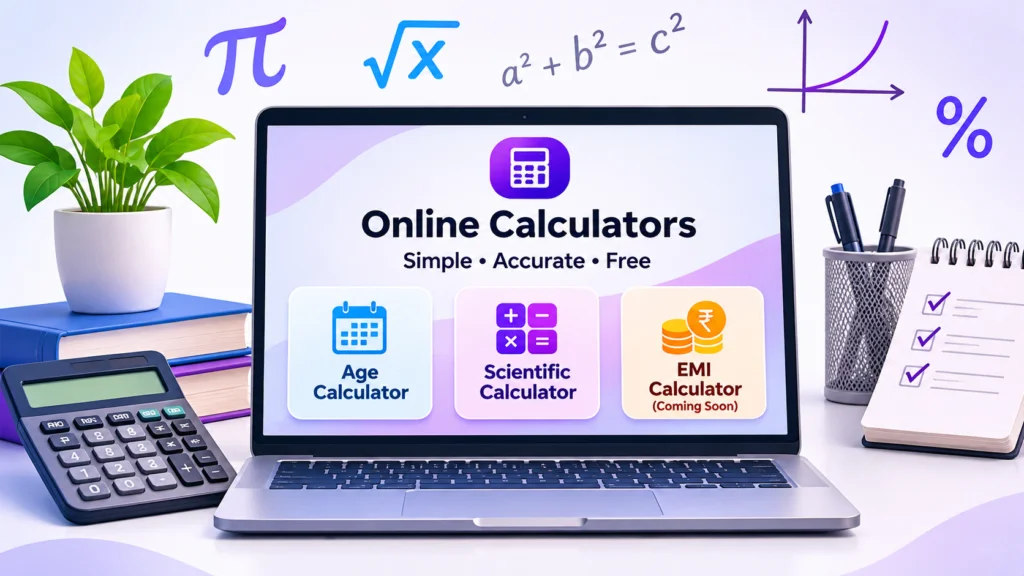
An online calculator may look like a simple digital tool, but it can make many everyday activities easier. From calculating shopping discounts and managing household expenses to checking homework and planning travel budgets, it helps people handle numbers without spending too much time on manual calculations.
Its biggest advantage is convenience. Users can access different types of calculators through their digital devices and choose the functions that match their requirements.
Whether you are a student, working professional, business owner or someone who simply wants to calculate everyday expenses, an online calculator can be a useful addition to your digital toolkit.
You do not need advanced mathematical knowledge to use one. Just enter the correct numbers, select the appropriate operation and review the result.
Sometimes, making everyday calculations easier is all about having the right tool at the right time.
FAQ’S
1. What is an online calculator?
An online calculator is a digital tool that helps users perform mathematical calculations quickly using a smartphone, computer or tablet.
2. Can I use an online calculator for free?
Yes, many online calculators are free and provide basic mathematical operations, percentage calculations and other useful features.
3. What types of online calculators are available?
Common types include basic, scientific, percentage, financial, date and time, and unit conversion calculators.
4. Are online calculators accurate?
Yes, online calculators can provide accurate results when the correct numbers and mathematical operations are entered.
5. Can students use online calculators for studying?
Yes, students can use them to check mathematical answers, solve numerical problems and practise different mathematical operations.